


[vc_row columns=”1″ height=”small”][vc_column][vc_column_text]
It can be a nightmare when your radiators stop working properly, especially in the depths of winter. They might not warm-up or they might only get hot at the top or at the bottom. Your radiators could be noisy and need bleeding or you might have a radiator that’s leaking.
Radiators may not heat up due to trapped air that needs bleeding, a faulty boiler or central heating pump, thermostatic radiator valves that are stuck or set too low, or blockages caused by sludge or rust buildup in the central heating system.
If you’re having problems with your radiators, don’t worry as many of these problems are relatively straightforward to fix by yourself. And if not, we’re only a phone call away.
There are several common radiator problems that can mean they aren’t working properly, some of which we have highlighted below.
How do Radiators Work?
First of all, it’s worth understanding how radiators actually work. Radiators work by heating the room through processes known as radiation and convection. A radiator uses energy to transfer heat to the air through electromagnetic waves – similar to the heat from a stove or an open fire. The bigger heat contribution of a radiator though is through convection. This is when the radiant energy heats the air next to a radiator, the heated air rises, which pulls cooler air through the radiator and starts the air moving. This movement forms vertical currents that travel across a room, carrying the heated air with them making your house nice and toasty.
Learn more about Choosing the Right Radiator for Your Home.
Five Common Radiator Problems
Now you know a little more about how radiators work, we’ll go through the most common radiator problems and how you can fix them.
1) The radiator has hot and cold patches
This is a very common problem that is fortunately very easy to solve. Normally, there are two possible reasons for radiators that are not evenly hot:
There is air trapped in your radiator
This is very simple to fix. All you need to do is locate the radiator bleed and use a radiator key to release the air.
There is sludge in your radiator
Sludge in the radiator is caused by rust and corroded metal that has broken off internally and is sat at the bottom of the radiator, causing it to be inefficient and not heating up properly.
The best way to get rid of this is to remove the radiator from the wall and flush it out with water you can also add a central heating inhibitor will help prevent it from happening again. We recommend getting a professional to help with this as it can be a bit difficult to fix on your own.
2) One radiator not heating
This is another fairly common problem. For example, you may have ten radiators in your house and nine of them are getting hot whereas one remains cold.
To resolve this issue, open up the lockshield valve on the cold radiator, turn on the thermostatic radiator valve and remove the top and check to see if the pin is stuck.
Check out this video to learn how to do this:
3) Radiators not getting warm
If your radiator is not heating, it’s likely that your system needs balancing.
This ensures that the flow of hot water coming from your boiler is distributed evenly around all of your radiators. Balancing your radiators can be a tricky problem to fix if you are not sure what to do. Get in touch with PlumbGas to see how we can help.
4) A leaky radiator valve
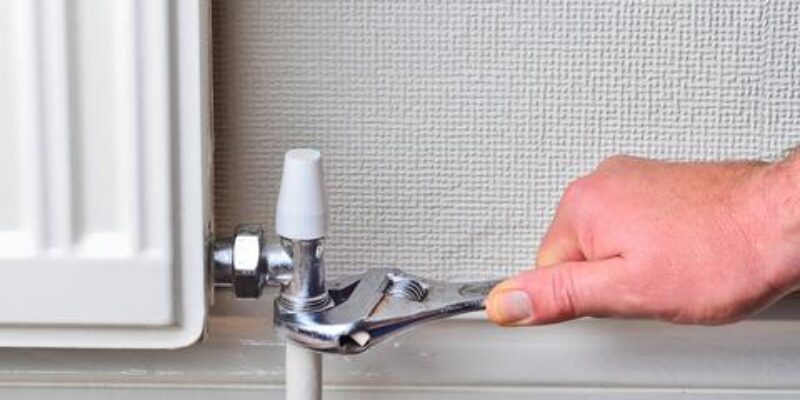
Water leaking out of your radiators can cause serious and expensive damage to floors and ceilings, so it’s important to get this sorted quickly and efficiently. Sometimes this can be fixed by simply tightening the nuts on the valve with a spanner. In some cases, you may need to replace the entire valve if it is old or faulty.
5) Radiators are cold and hot taps are cold
This may sound silly, but check your thermostat is set to the correct temperature, ideally between 17 and 20 degrees. If the radiators are still not warming up, then check both the central heating and hot water are turned on.
If you’re still experiencing problems, check the motorised diverter valve (normally next to your boiler) which controls the flow of heated water is switched on.
If this doesn’t work, then the problem could be the pump. The pump forces hot water down the flow pipe to the radiators and taps and could have become blocked with dirt or air may be trapped. Your pump should have a small nut which can be turned to release excess air. When fluid comes out, close it again. Switch the pump back on to see if the system works.
[/vc_column_text][vc_column_text]
Other reasons why your radiator might not be working
Air Pockets: If the top of your radiator feels cold while the bottom is warm, it could be due to trapped air inside. Air pockets can form when air gets into the system and takes up space meant for hot water, disrupting the radiator’s ability to circulate heat properly.
Leaks: A small leak in the radiator can gradually affect its performance, causing it to stop working efficiently. If you frequently find yourself having to repressurise your boiler, this could be a sign of a leak.
Faulty Radiator Valves: Thermostatic radiator valves can sometimes seize up, preventing the radiator from functioning. A heating engineer can diagnose this issue and replace the valve if necessary.
Faulty Central Heating Pump: If multiple radiators are not heating up, or all of them feel cold, the problem may be a faulty central heating pump. In such cases, a professional should inspect and repair the pump.
Blockages: A radiator that only heats up partially may have a blockage. Blockages can be caused by trapped air or a buildup of debris in the system.
Other Potential Issues: Additional reasons why a radiator might not be working include:
- A faulty radiator thermostat
- A faulty diverter valve
- Problems with the central heating controls
- Low boiler pressure
[/vc_column_text][/vc_column][/vc_row][vc_row us_bg_rev_slider=”slider-1″ columns=”2″ height=”small” content_placement=”middle”][vc_column width=”1/2″][vc_column_text]
How can PlumbGas Help with Common Radiator Problems?
We don’t just install radiators, we also provide a variety of heating services to fix those common radiator problems and get your radiator(s) back working as they should be.
Our heating services in the Staffordshire area include:
- Radiator Repairs – if you have a leak or cold patches on your radiators we can repair it for you.
- Radiator Replacement – we can replace one or all radiators in your home ensuring your central heating system still runs efficiently.
- Radiator Valves – if you have old or faulty Thermostatic Radiator Valves, we can replace them for you – there is no need to replace the whole radiator.
- Expansion Vessels – protect your heating system against extra pressure with an Expansion Vessel, an essential bit of kit for any system or combi boiler.
Can’t see what you are looking for in the list above? Then please contact us and we will be happy to help you.
[/vc_column_text][/vc_column][vc_column width=”1/2″][us_image image=”3302″][us_separator size=”small”][us_btn label=”Call Us Now” link=”%7B%22url%22%3A%22tel%3A%20%22%7D” align=”center” hide_with_empty_link=”1″][/vc_column][/vc_row]