


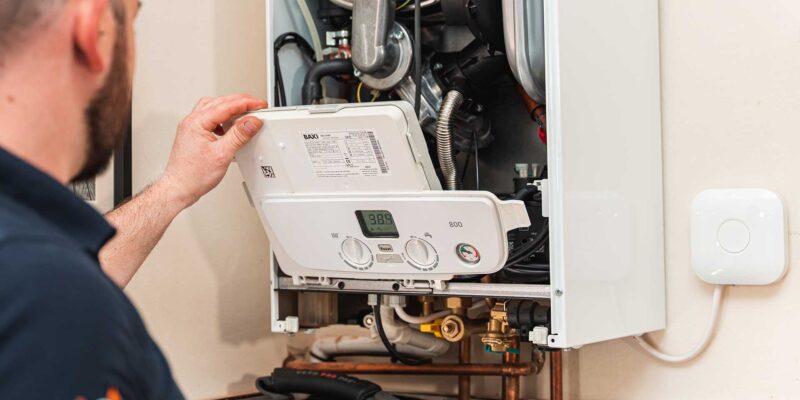
No-one likes to be without heating and hot water, especially in the winter. If you find yourself without heating and hot water, stay calm with our handy tips to be able to check and top up the pressure in your central heating system yourself. After trying these handy tips if you are still without heating and hot water, do not panic as we are only a phone call away and we’ll be happy to assist you.
What is boiler pressure and why does it matter?
Boiler pressure is important as it heats the cold water which flows through your pipes and radiators to heat your home. The pressure shown on the boiler is determined by the amount of water that is in the heating system. It’s essential to ensure that the pressure is right to enable your heating system to run correctly and that components aren’t under pressure.
How can I check my boiler pressure?
On the front of your boiler there will be a pressure gauge. Most combination and system boilers will have a built in pressure gauge where a needle will indicate if your pressure is low or high. Some other boilers may have an LCD screen and this will flash or show an error message or reading if the pressure is too high or low.
The ideal pressure for your boiler is between 1 and 2. It’s normal for this pressure to increase slightly when the system becomes hot. However, anything over 2.5 will be considered as high pressure and anything below 1 will indicate that you have pressure loss.
Why has my boiler pressure dropped?
A slight pressure drop may not be noticeable, but when you end up with no heating or hot water or your radiators fail to heat up, it could be due to the following reasons why.
-A Water Leak – A leak means that water has been lost from your system and this will result in lowering the pressure. We would recommend you to have a look around all your pipes, radiators and around your boiler for water or damp patches which are visible. Also, look for water stains and paint discolouration. The pipework can become wet due to condensation, so if you wipe around the pipes and place a bowl underneath you will be able to then check for any drips as they’ll be visible in the bowl. We do not recommend looking inside your boiler as you’ll need a gas registered engineer to do this. We will be happy to advise and help you, we are only a phone call away if you do find a leak.
-Bleeding a Radiator – If you have recently bled your radiators, releasing water from your central heating system can lead to loss of pressure as this occurs when air has been released which will result in lowering the pressure in your boiler. Again. look around your pipework for discoloration or any wet areas and place a bowl underneath the leak.
No visible leaks and your boiler is still losing pressure?
If you have found no leaks which are visible and your boiler is still losing pressure, there may be a leak which is hidden on the system. We are able to help you locate a leak and to investigate this for you, so please give us a call and we will be happy to assist you.
How to repressurise your boiler with low pressure?
It is possible to repressurise your own boiler, however as each boiler pressure system is different, it would be useful to check the manual which came with your boiler. If you don’t have the manual to hand, you could also research the brand of your boiler’s website as they may have some helpful tutorials about topping their systems up.
By repressurising a boiler it’ll be allowing more water to enter your system using the filling loop. The two main types of a filling loop are built in or external which will vary in design. Below are the basic steps you will need to repressurise your system:
1: Switch off your boiler and allow it to cool
2: Find the filling loop / attach it to your boiler if this is the filling loop you have
3: Ensure you can see the boiler pressure gauge when you’re using the filling loop
4: Open the valves to let the water into your system
5: Once the gauge reaches the 1.5bar you can then turn off the valves
6: Switch your boiler back on
7: Remove the filling loop attachment if this is what you’ve used and store away.
If your pressure drops again or if you are having to top your pressure up on a regular basis, we would recommend you calling us as we are able to advise on how the problem should be fixed. Equally, if you are ever unsure or don’t feel comfortable repressuring the boiler yourself, please give us a call as we will be happy to help you.